

Monday 12 October, 2026
Papua New Guinea needs to develop more electricity generation projects to make full use of its upgraded Ramu Grid transmission network, following the commissioning of a K350 million reinforcement project in Lae, Morobe Province, on October 9.
The 132kV Ramu Transmission System Reinforcement Project, commissioned at the Taraka Substation, forms part of a wider K1.9 billion investment in the transmission network designed to carry electricity across the Ramu Grid.
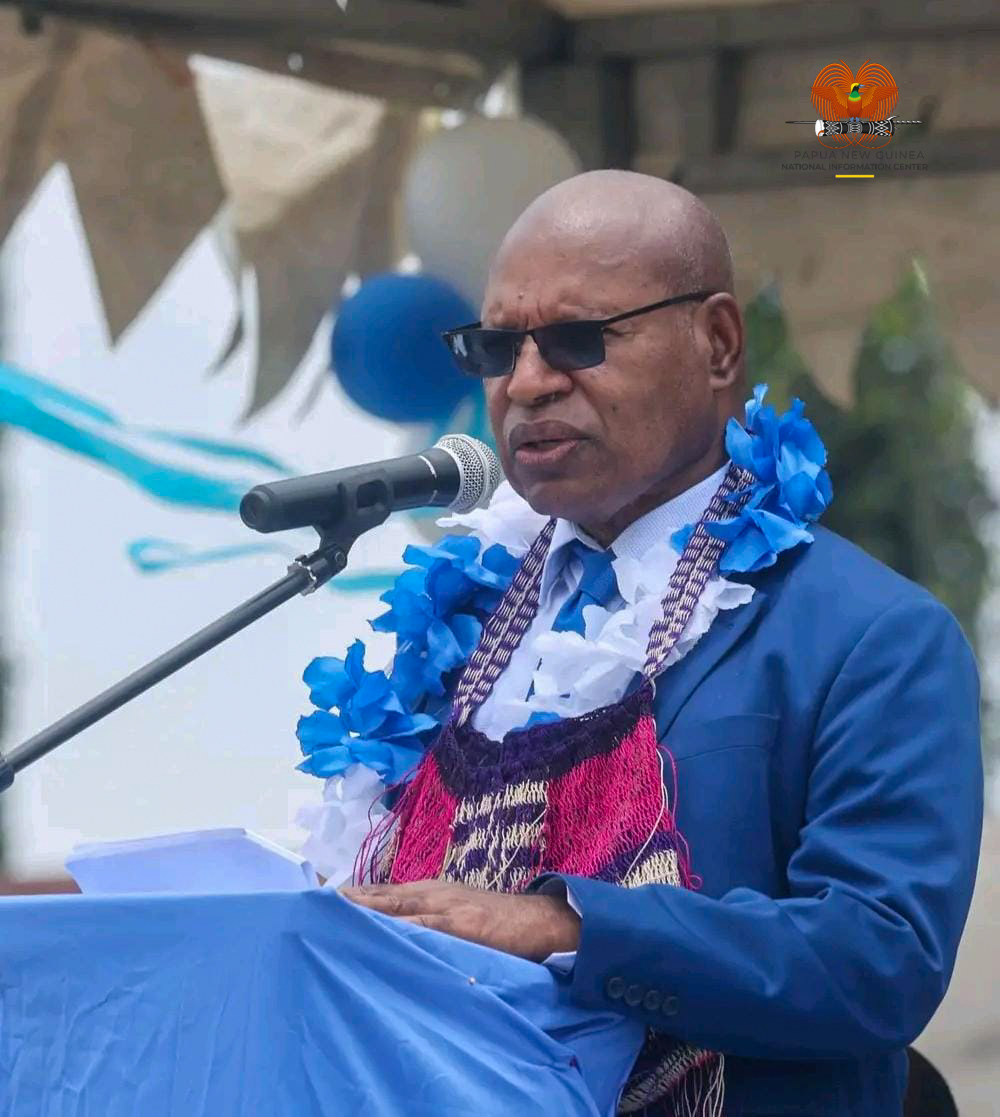
Minister responsible for PNG Power Limited (PPL), Richard Maru, said the completion of the transmission infrastructure was an important step, but the country now needed to increase the amount of electricity it could generate to supply the network.
The project was funded through a K236.7 million loan from the Japan International Cooperation Agency (JICA) and K113.3 million in counterpart funding from the Papua New Guinea Government.
Together with the Tari–Hagen–Yonki 132kV transmission line, the project completes the main transmission backbone for the Ramu Grid.
Transmission lines carry electricity from power stations to substations and distribution networks, where it is delivered to homes, businesses and other consumers.
However, an expanded transmission network can only deliver its full benefits when there is enough electricity being generated to supply it.
Maru said the Government’s next priority should be developing new generation projects, particularly hydro-power, to meet electricity demand and make better use of the investment already made in the network.
Papua New Guinea has several rivers that could support hydro-power development, with the minister identifying four potential projects for further consideration.
These include the Tua River project in Eastern Highlands Province, with a proposed capacity of 60 to 100 megawatts; Yenem Busu Marambi in Morobe, with 57 to 184 megawatts; Yanganon/Nankina in Madang, with 10 to 110 megawatts; and the 80-megawatt Naoro Brown project serving Port Moresby and Central Province.
The proposed capacity ranges indicate the potential scale of the projects, although the final generating capacity would depend on their development.
Hydropower uses flowing water to drive turbines that generate electricity. It can provide a long-term source of power, but developing these facilities requires significant investment, planning and construction.
Maru said hydro-power projects generally take between five and 10 years to deliver, meaning the Government would also need to consider shorter-term options while the larger projects are developed.
For Morobe Province, he proposed temporary solar power plants at Wawin, Yalu and Erap, with planned capacities of 25 megawatts, 10 megawatts and between 30 and 50 megawatts respectively.
Solar power could provide additional generation while longer-term hydro-power projects are pursued. However, the proposed plants would still need to be developed and connected to the electricity network before they could supply consumers.
Maru said investment in hydro-power generation had not kept pace with the country’s electricity needs over the past 36 years, contributing to greater reliance on independent power producers.
He said developing new generation capacity would be important for PNG Power’s long-term position and the country’s ability to meet growing demand for reliable and affordable electricity.
Reliable electricity is needed by households, businesses, schools, hospitals and industries. For businesses, dependable power supports daily operations, while additional supply can help communities and industries access electricity as demand grows.
The transmission reinforcement project was funded through cooperation between Papua New Guinea and Japan. Maru acknowledged Japan’s contribution to the country’s energy sector, including technical equipment, engineering training and rural electrification.
Japan’s support has included equipment for the Rouna 4 Hydropower Station, transmission and substation testing equipment, and specialized training for 20 engineers in substation operations, network planning, protection and financial and economic analysis.
A grant-funded rural electrification programme has also helped connect 3,700 households across several districts in Papua New Guinea.
Maru thanked the Japanese Government and people for their continued support, as well as the Marape-Rosso Government for providing the counterpart funding for the transmission project.
He also acknowledged the PPL board, management, project team and landowners along the transmission route for their role in completing the project.
With the main transmission backbone for the Ramu Grid now completed, the next stage will depend on developing enough electricity generation to supply the network. The proposed hydro-power and solar projects outlined by Maru are among the options being considered to address that need.