

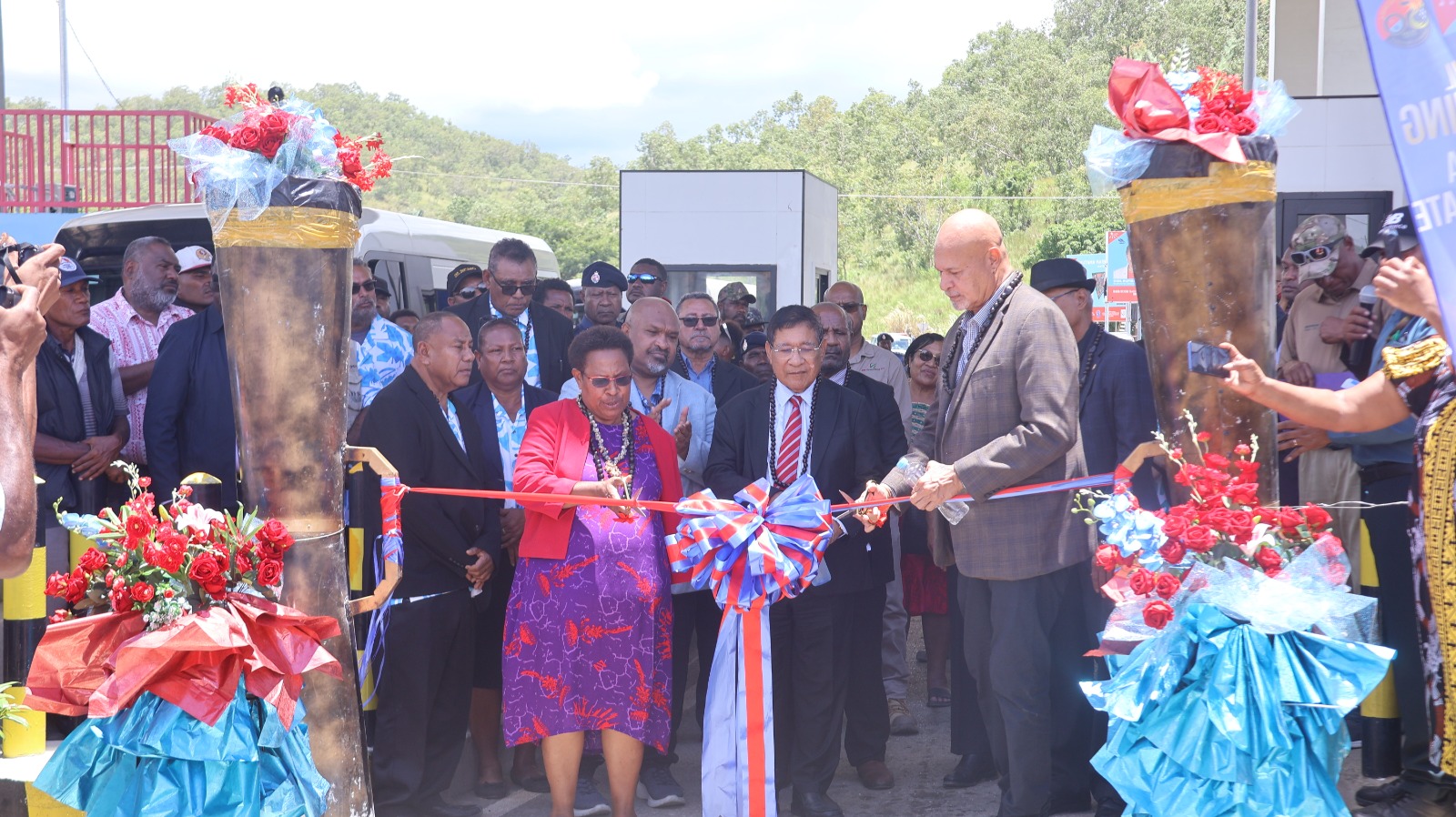
Acting Prime Minister and Minister for Lands and Physical Planning, Hon. John Rosso, says Papua New Guinean citizens deserve access to affordable land and housing packages in both urban centers and provincial townships.
He made the remarks during the official launch of the Central Provincial Government’s Boom Toll Gate, Residential Estate, and Central Provincial Market projects on February 5 at Bautama, Central Province. These projects form part of the province’s long-term city development vision, with Bautama identified as the proposed new provincial township.
In his keynote address, Acting Prime Minister Rosso reaffirmed the National Government’s full support for the Central Provincial Government as it works to establish its own provincial city—complete with markets, residential estates, office complexes, and supporting infrastructure—more than 50 years after Independence.
Rosso highlighted the importance of cooperation between provincial governments and traditional landowners to secure land and ensure affordable housing for Papua New Guineans, particularly in rapidly growing urban locations.
He also urged Central Province landowners to consider the long-term value of their land and avoid selling it cheaply, which could risk their displacement as populations expand.
Hon. Rosso said, “I would like to acknowledge the old leaders, past and present, and the traditional landowners of this place we stand on. As you can see, housing is a major issue for Papua New Guineans. When people say affordable, it depends on the type of land and housing they can afford—whether high-end homes for higher income earners or options suited to middle-income earners.”
He added, “People often misunderstand what affordable means. There must also be options for low-income earners, costing under K100,000. Government needs strong partners to make serviced land available for our people because it’s not just about mobilising land. To develop a 450-square-meter allotment, you need power, water, sewerage, roads, and streetlights. Each allotment requires at least K100,000 to fully develop.”
Acting Prime Minister Rosso further explained the scale of development needed: “Four hectares of land can hold about 20 to 25 houses. Four hundred hectares equals roughly 2,000 allotments, but we must determine which affordability levels are required.”
Emphasizing the need for proper housing infrastructure, he said, “We must put our people in decent homes with water, power, and serviced land. Bus drivers, taxi drivers, waitresses, and workers who cannot afford K700,000 homes should have access to allotments in the K50,000 to K100,000 range. That’s where government must heavily subsidize infrastructure.”
Rosso reaffirmed the Lands Department’s commitment to working with partners, stating, “The Lands Department looks forward to working with Central Province, NCDC, and other partners to find a way forward so we can house our people. Every citizen deserves a roof over their head, and that remains a major challenge for government.”
Discussing private sector involvement, he noted that a super fund–backed enterprise is developing a 100-hectare block of land in Lae to build about 2,000 homes priced at K500,000 or below. He commended the Central Provincial Government and its private partners for their focus on sustainable housing at Bautama.
The Acting Prime Minister added that Central Province residents have long faced hardship traveling to Port Moresby to sell produce, access services, and seek employment. He stressed the urgent need for the province to develop its own economic and administrative center. The overall Central Provincial City development plan—including initial earthworks and essential infrastructure—is estimated at around K300 million. About K27 million has already been spent on the three priority projects and related works.
Rosso noted that rapid population growth has led to land boundary conflicts, disputes over traditional markings, and increasing development pressures.
“We must be prepared, properly planned, and focused. Too often, development happens in an unplanned, disorganized manner, causing long-term problems,” he said.
Drawing from national experiences, he emphasized protecting customary landowners and ensuring they benefit from development.
He concluded with a call for stronger cooperation with landowners: “We must find solutions and land for our people who need lower-cost housing, while building partnerships with traditional landowners so they do not lose their land. We need the right mix to support landowners, uphold honest government, and put roofs over our people in the name of development.”
The Central Provincial Market is being built by China Guangdong Foreign Construction Company, the Residential Estate by YFIG Builders, and the boom gate facility is managed by a local partner.